Learnings from the Convening
Tuesday, 3 December, 2024 | Online
Doc Society’s Big Tech Narrative Initiative (BTNI) was started to interrogate and devise narrative strategy as we face a critical juncture in how Big Tech is shaping our information ecosystems, social relationships, and democratic futures. The stories we tell about this moment will shape our futures, and we know narrative strategy is built best in community. The BTNI Online Convening kicked off this work. To empower us with knowledge and framing to understand this moment. To celebrate stories that are planting the seeds for accountability, change, justice, and hope. To inspire a constellation of citizen-driven narratives about Big Tech that can reach across platforms, across forms, and work to engage, alert, and inspire audiences.
We convened for a one-day online event on Tuesday, 3 December, 2024 to develop our collective knowledge and strategy moving forward. Throughout the event, we highlighted the role storytelling has in shaping the way our societies interact and engage with Big Tech, focusing on the intersections of Big Tech with democracy, human rights, national security, gender rights, youth political engagement, journalism, cultural spaces, and more.
Here’s a summary from the convening:
Welcome & Messages to Storytellers
Hosted by Doc Society & The Citizens
Featuring Shoshana Zuboff, Roger McNamee, Kate Stonehill, Karim Amer
What came up:
Doc Society and The Citizens welcomed attendees and grounded us in the focus of the convening - to think about developing narrative strategy to shape public understanding of the most consequential societal shift of the past century. The conversation underscored why now is critical: conglomerates such as Apple, Amazon, Microsoft, Google/Alphabet, Meta, Uber, Netflix, Alibaba, Tencent, and others dominate state power, economies, geopolitics, and digital infrastructure. Creators and journalists must accelerate efforts to translate these complex impacts for citizens, fostering broader awareness, engagement, and accountability.
We then heard messages from Shoshana Zuboff, Roger McNamee, Kate Stonehill, and Karim Amer to storytellers in the room about what focus is needed, what actions we can take, and how we can empower ourselves to take on this fight. You can watch their messages below:
Big Tech: A Story Of Power
Hosted by Clara Maguire
What came up:
Clara traced how the internet’s early promise of connection, community, and entertainment has morphed into a landscape dominated by mass surveillance, data‑driven manipulation, and an accelerating merger of Big Tech with state power. She illustrated this story with examples including Starlink’s telecom disruption, crypto’s challenge to banking, and defense‑focused firms like Palantir and Anduril securing U.S. contracts. In the age of Big tech, our personal data is being held by a handful of corporations that fuel AI models, amplify polarization, and undermine democratic oversight. The call to action? We must unite across industries, across movements, to reclaim and rewrite the narrative, build user‑controlled alternatives, and push strategic regulatory levers before the tech‑state alliance solidifies its grip.
"The work of protecting democratic values in this new landscape has only just begun. It means we have a job that absolutely requires us to be greater than the sum of our parts. Our challenge is how we step into that [...] How do we take this story and find ways to talk about it that can change the narrative and engage audiences in the fightback that is so desperately needed?"
—
Clara Maguire
Big Tech on our Big (and small) Screens
Hosted by Doc Society
What came up:
An analysis of what mainstream media, film and television has served the public when it comes to stories about technological developments and Big Tech. Analysing mainstream English language film and TV between 2010-2024, Doc Society found most stories were centred around CIS white, heterosexual, men from the global north, men as tech innovators, whistleblowers, heroes utilising tech, rebelling against tech with tech, romantically connecting with robotic/tech-enhanced/AI women. Most of the stories were serious, with a large sub-genre of techno-thrillers and a smaller sub-genre of satirising tech innovators. When it came to non-fiction, Doc Society found a large focus on male tech innovators, online communities, and more recently a shift to look at problems within the structures of Big Tech - though not a huge amount of non-fiction broke through, which is a question to address as we build narrative strategy in this area.

What is the public feeling about all of this?
Hosted by Doc Society
What came up:
The main takeaway from reviewing studies and findings on public opinion regarding Big Tech was that the data shows growing concerns about Big Tech, its data practices, its impact on democracy, and the lack of agency we have in using Big Tech products - and this is stronger in localities where Big Tech is viewed as a reason for the spread of misinformation and societal polarization. People want technology in their life, just not like this - support for regulation, transparency, and diversification is wide.
The Stories We Need to be Telling: Panel Discussion
Featuring Carole Cadwalladr, Nkem Agunwa, Zamaan Qureshi
Moderated by Felipe Estefan
What came up:
The panel brought together leading voices to reframe the conversation around Big Tech’s unprecedented societal impact, exposing the myths that portray tech as inevitable, overly complex or a universal “solution”. The panel agreed that these stories silence the lived harms faced by ordinary people, especially women, youth and marginalized communities. They called for a shift from abstract, elite‑driven rhetoric to locally grounded, human‑centered storytelling that highlights agency, illustrates concrete harms (from disinformation to algorithmic bias and tech‑enabled gender‑based violence), and showcases alternative, community‑built tools. As we continue to tell stories about Big Tech and develop narrative strategy, we must:
- Re‑frame tech as a tool, not a destiny, by foregrounding diverse, everyday experiences
- Build a pipeline of inspirational, evidence‑based narratives that inspire policy change and public engagement
- Mobilize new distribution models and protective funding so storytellers can safely amplify these stories at scale.
- Tell inclusive stories, empower local voices, and demand transparent, accountable tech that serves the public interest
"I hope [...] you’re leaving here with a call to action to tell different stories. To tell new stories about the future that we actually deserve. An alternative future that we haven’t yet experienced, in which we center on agency, diversity of voices, and transparency. Where we actually call out the harms, as Zamaan was saying. In which we tell stories that are about individuals, but that also speak to an experience that is a shared human experience of how we engage with technology. As Carol was saying, stories that could appear to be not just about technology, that speak to things that we care about, where we think about alternative and new distribution channels. [...] And as Nkem was saying, stories that are grounded on our local realities and experiences and can contribute to a new tapestry of narratives about that technological future that we imagine, one in which tech actually serves us, protects our privacy, protects our bodies, protects our rights, and protects our futures."
—
Felipe Estefan
Creative Showcase
Hosted by Doc Society
What came up:
The showcase highlighted a shift from glorifying tech titans to exploring how technology shapes everyday lives, emphasizing the need for more nuanced, human‑centered narratives. Five film projects dealing with issues surrounding Big Tech and technological elements of modern society in time sensitive, creative, and innovative manners, presented their work. Ranging from a Chinese documentary on women forming intimate bonds with AI chatbots, an American Gen Z‑driven film exposing digital addiction and advocating for a youth‑led wellness movement, a German‑Namibian sci‑fi documentary fusing Afrofuturism with anti‑colonial tech activism, an Indian fictional feature portraying women’s invisible work as AI data labelers and how this intersects with motherhood and community life, and a British feature documentary built entirely inside a video‑game, showing how technology can be a tool for connection, creativity, and artistic expression.
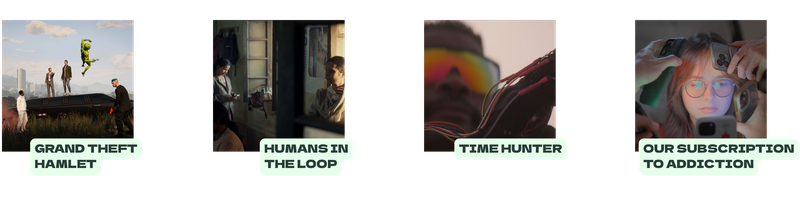
For more information about the Creative Showcase participants, head over to the "Projects" tab!
Cultural Strategy Essentials & Other Possible Futures
Hosted by Beadie Finzi & Sandra Whipham, Doc Society
What came up:
What is the relationship here between between the work of artists and storytellers and the future of Big Tech? Doc Society are practitioners in and passionate advocates of cultural strategy, which Riki Corney and Liz Manne define:
"A field of practice that centers artists, storytellers, media makers and cultural influencers as agents of social change [...] Over the long term, cultural strategy cracks open, reimagines and rewrites fiercely-held narratives, transforming the shared spaces and norms that make up culture — helping to shape opinions, beliefs and behaviors that lead to electoral, legislative and policy wins."
We were reminded that at the heart of conventional advocacy and political campaigns, we must have cultural strategy. It is storytelling that forges deep emotional connections with audiences, moves the needle, and incites change and action.
When it comes to Big Tech, our hunch is that we need to focus on narrative-building around alternative futures - moving forward rather than merely fighting off attacks. One person who is visioning alternative futures is Audrey Tang, whose collaborative work on Technodiversity and Plurality is helping us dream of a more dynamic, harmonious, and inclusive world where technology can be a tool to build community, not break us apart. You can find links to Audrey's work in the "Resources" tab.
Closing
Before signing off, Doc Society and The Citizens prepared a selection of reading and resources for participants to dive into. You can find these in the "Resources" tab.
This online convening was just the first phase of the BTNI, a new narrative initiative for Doc Society’s Democracy Story Unit. Please sign up to our newsletter to stay up to date with announcements about the next developments of the BTNI. If you have any questions, or are working on a project relating to this topic that you want to share with us, please write to democracy@docsociety.org.
Thank you to everyone who joined us for the kickoff — we can’t wait to continue this work with all of you.
"Technology is not the weather. It is not inevitable. It is not a force that visits us from the beyond. The stories you tell are, therefore, not about technology - they're about power. There is no such thing as technology independent of the economic and political forces that bring it to life. [...] Now more than ever, we must make our own weather, and your art can inspire us. Be part of this grand undertaking.”
Shoshana Zuboff
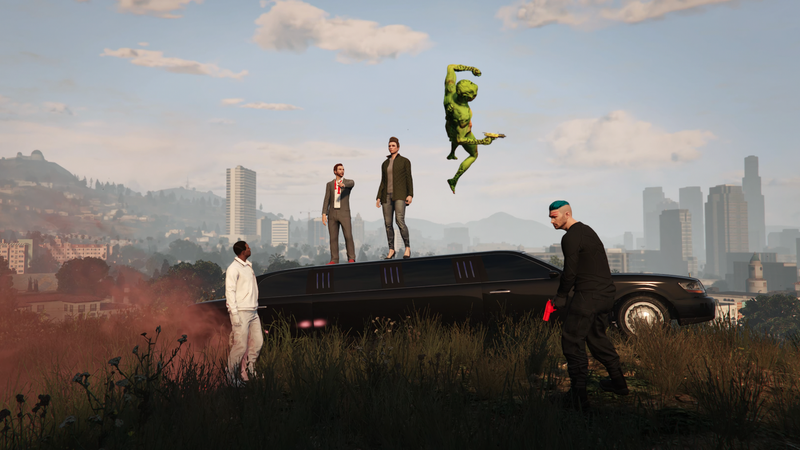
Grand Theft Hamlet
Directors: Sam Crane, Pinny Grylls
Producers: Julia Ton, Rebecca Wolff
Status: Completed, In Distribution
Country of Production: UK
January 2021. The UK is in its 3rd lockdown and all entertainment venues remain closed. For theatre actors Sam and Mark, the future looks bleak. As the pandemic drags on, Mark - single and childless - is increasingly socially isolated, while Sam panics about how he is going to support his young family. They spend their days in the online digital world of Grand Theft Auto and when they stumble across a theatre, they suddenly have an idea to stage a full production of Hamlet within the game. This film charts their ridiculous, hilarious and moving adventure as they battle violent griefers and discover surprising truths about life, friendship and the enduring power of Shakespeare.

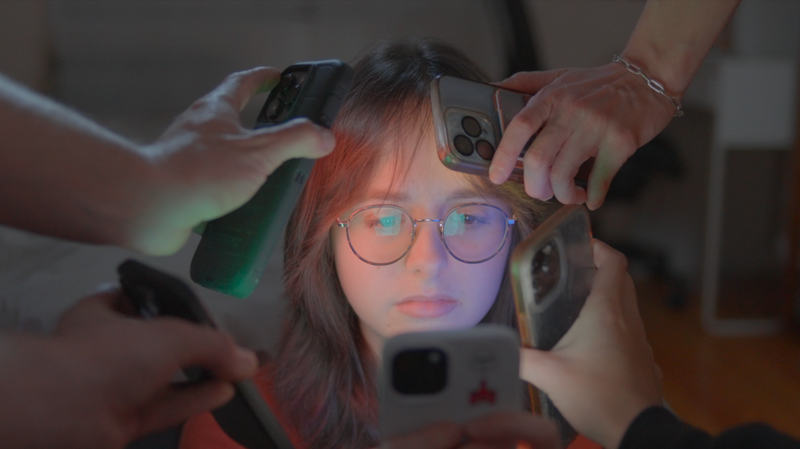
Our Subscription To Addiction
Director: Yoelle Gulko
Producers: Yoelle Gulko, Victoria Brandt, and Sarah Sparkman
Status: Post-production
Country of Production: USA
Our Subscription to Addiction is a story about hope. It follows my journey from a decade of isolation, self-sabotage, and endless YouTube rabbit holes to the realization that the generation most harmed by phone addiction is also the one capable of solving it. Beginning at my lowest—trapped in the cycle of digital dependence—the story shifts as I search for answers and discover a rising movement of young activists confronting the problem. Through conversations with emerging leaders, I explore youth-driven solutions, from school-based social media detox initiatives to bold pushes for meaningful tech regulation in Washington, D.C. As the movement grows, I find both community and my own digital well-being practice. The film calls on all young people to take control of their relationship with social media—because we are the generation that will change the narrative.
Time Hunter
Director/Writer/Producer: Daniel Chein
Director/Writer/Protagonist: Mushiva
Producer: David Felix Sutcliffe
Status: In Production
Countries of Production: Germany, Namibia, USA
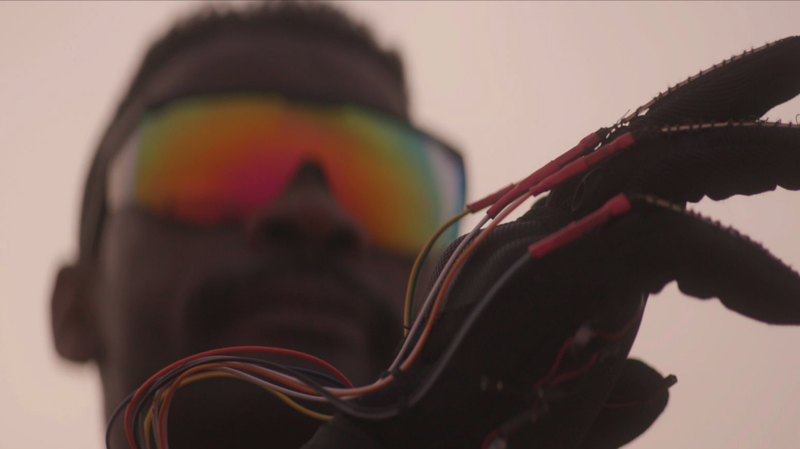
A cinematic journey at the nexus of capitalism, colonialism and tech, TIME HUNTER is a sci-fi documentary that blends cinema verité with African futurism. The film follows Mushiva, a Namibian immigrant in Berlin, and the mirrorworld exploits of his alter-ego, the Time Hunter, a spy dispatched by Black Africans to topple their oppressors.
Mushiva was born in a war camp during Namibia’s liberation struggle and, as a child, coped with the traumas of colonialism and apartheid through sci-fi, comic books, and video games. Now an adult and artist, he processes his trauma by creating alter egos that emerge in his music and art.
From his imagination, the Time Hunter emerges. Determined to disrupt colonial continuities across time and space, he departs from The Colony to infiltrate The Capital, a cold urban environment monitored by boundary agents. His mission? Accelerate the world towards a utopic machine age undistorted by capitalism and white supremacy.
Employed by a research group, Mushiva is assigned a case investigating the genocide in German Colonial Namibia. Meanwhile, the Time Hunter begins constructing Ancestor A.I., a companion droid who guides him through the maze of the diaspora, reminding him of his mission, and the post-capitalist future he comes from.
When Mushiva returns to Namibia and finds his mother evicted, the line between himself and the Time Hunter blurs. As they both confront the costs of survival, they realize the revolution hinges upon the mutual support of others, and placing trust in a world they’re determined to transform.
Humans In The Loop
Writer/Director: Aranya Sahay
Producers: Mathivanan Rajendran, Sarabhi Ravichandran, Shilpa Kumar
Status: Completed, In Distribution
Country of Production: India
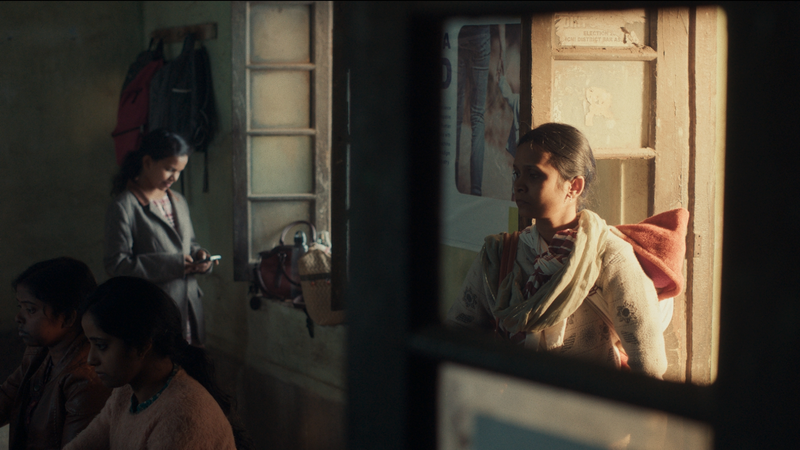
HUMANS IN THE LOOP tells the story of Nehma, an Adivasi woman from the Oraon tribe who begins interacting with AI while working in a remote data centre in Jharkhand. After enduring decades of name-calling and taunts that echoed deep-rooted biases against her community, Nehma makes the difficult decision to separate from her partner. Seeking solace and a fresh start, she returns to her ancestral village with her children. To support her family, she takes on an unexpected role as a data labeller- training algorithms to recognize and differentiate between objects, with the same patience and precision as a parent guiding a child. As she delves deeper into her work, Nehma begins to uncover the subtle yet persistent human biases embedded within AI systems, prompting her to question whether technology can ever truly reflect an Indigenous worldview.
The film was developed through Storiculture’s Museum of Imagined Futures Impact Fellowship program. Supported by Omidyar Network India, it combined funding, mentorship, and field expertise to enable filmmakers to explore critical stories about responsible technology and India’s evolving digital society.
Reading & Resources
Resources For Storytellers
- ‘AI, Artists And Africa: a toolkit and conversation starter’, Electric South
- ‘Best Practices for Use of Generative AI in Documentaries’, Archival Producers Alliance (APA)
- ‘Digital Security for Filmmakers’, Field Of Vision & Freedom of the Press Foundation
- The Global Impact Producers Alliance (GIPA)
- The Impact Field Guide & Toolkit
- Safe + Secure
- ‘Safer Storytellers: Resources’, IRIS
10 Works to Get Your Head Into the conversation around Big Tech
On Big Tech’s impact on our information ecosystems, democracies, & societies:
- New Dark Age: Technology and the End of the Future, James Bridle, 2023 edition
- ‘Winning the Fight for the Future of Information’, Rootcause, October 2024
- ‘How to survive the broligarchy: 20 lessons for the post-truth world’, The Guardian, Carole Cadwalladr, 17 November 2024
- ‘The hidden power in the stories Big Tech sells us’, Future Narratives Lab, Daniel Stanley, 27 May 2021
- ‘A Call to Action for Environmental Justice in Tech’, Branch, Sanjana Paul, Summer 2022
Reimagining technology to build decolonial, technodiverse, & democratic futures:
- Plurality: The Future of Collaborative Technology and Democracy, E. Glen Weyl, Audrey Tang & ⿻ Community, April 2024
- ‘Decentralized and rooted in care: envisioning the digital infrastructures of the future’, Branch, Paola Mosso & Janna Frenzel, Autumn 2023
- Decolonising the Digital: Technology as Cultural Practice, Edited by Josh Harle, Angie Abdilla & Andrew Newman, October 2018
- ‘Technodiversity as the key to digital decolonization’, UNESCO, Domenico Fiormonte, 15 November 2024
- ‘Internet, show me no more blues: Towards a feminist Internet’, Internet Democracy Project, Yashashwini Santuka, 30 October 2021
More about Doc Society & Resources:
Doc Society
Find out more about Doc Society
Democracy Story Unit
Learn more about Doc Society's Democracy Story Unit, including the Democracy Story Labs, Fund, Kitchen experiments, and impact case studies
The Impact Field Guide
A comprehensive guide to the process, opportunity for creating impact with non-fiction media. Originally designed for documentary feature film campaigns, it has been updated to include a chapter on short-form media. An online resource and interactive downloadable pdf, is available in multiple languages.

Safe & Secure Guide and Checklist
A resource for independent filmmakers that addresses physical, legal and online security concerns.
Co-hosts

Partners

Contact democracy@docsociety.org Contact democracy@docsociety.org Contact democracy@docsociety.org Contact democracy@docsociety.org Contact democracy@docsociety.org Contact democracy@docsociety.org